Green Ship Recycling
Green Ship Recycling
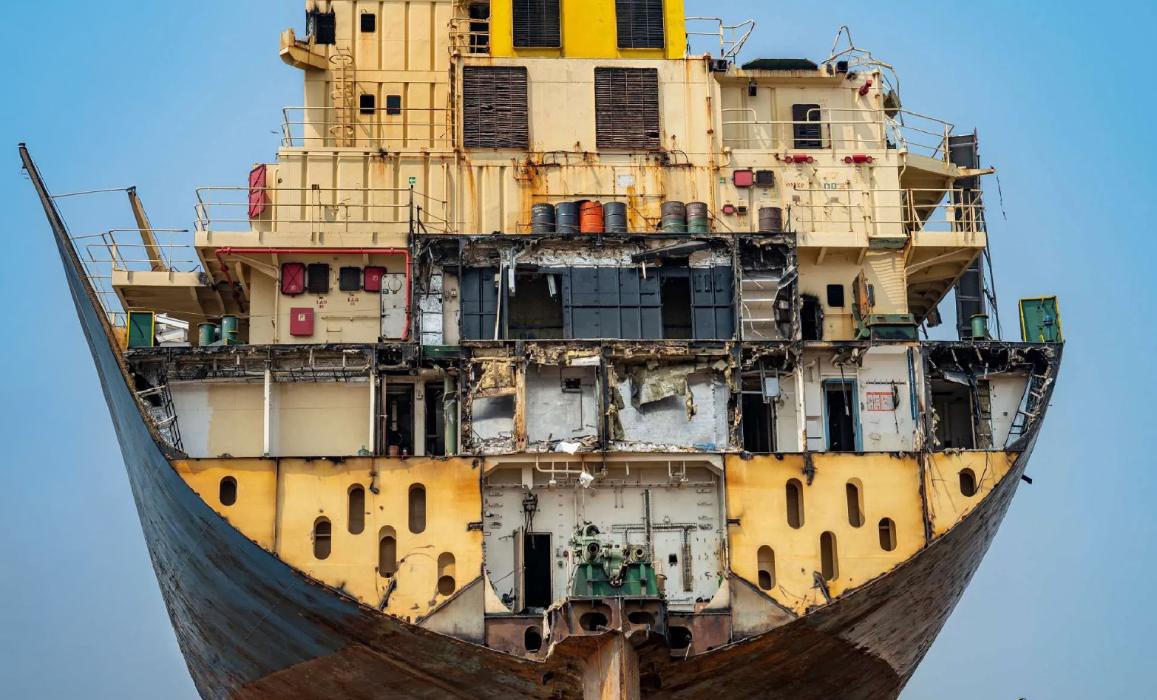
OSM Thome responsibly recycles out-of-service vessels in full compliance with relevant rules and regulations. Our qualified site team closely oversees each stage of the process and has the authority to stop work immediately if anything is not in accordance with our safety, environmental or welfare standards.
In particular, a ship recycling plan should include a Safety & Health Plan, an Environmental Compliance Plan, and an Operational Plan. Our company can manage the whole procedure of the recycling of your ship – from port exportation to the deliverance of the “Statement of Completion” with applicable regulations.
To learn more about OSM Thome’s Green Ship Recycling and Costs contact us!

The Steps Towards Sustainable Ship Recycling
Step 1 –
Contract for ship recycling
OSM Thome assists the shipowners with contract preparations with the recycling facility and preparation of documentation and records to meet the requirements of the IMO Hong Kong Convention and/or the EU Ship Recycling Regulation and its guidelines, the Inventory of Hazardous Materials (IHM), Ship Recycling Facility Plan (SRFP), Ship Recycling Plan (SRP), Statement of Completion (SoC), and class survey statement (Independent Regulatory Review Commission – IRRC). In addition OSM Thome will develop a Ship Recycling Facility (SRF) monitoring program.
Step 2 –
Inventory of Hazardous Materials (IHM) preparation
The IHM is a ship-specific record that only a qualified expert can prepare.
Step 3 –
Ship Recycling Plan (SRP) development
The recycling facility should develop the SRP. .In accordance with MEPC.196(62), it must refer to a specific SRF, reflect the vessel’s specific Inventory of Hazardous Materials (IHM) and provide licensed disposal and recycling solutions for all materials listed in the IHM.
Step 4 –
Ship Recycling Plan (SRP) approval process
The SRP requires Competent Authority (Recycling State) approval. Explicit approval shall be with written notice of result and tacit approval shall specify the end date of a 14-day review period. We recommend an expert assessment of the SRP.
Step 5 –
Approved Ship Recycling Plan (SRP)
The SRF forwards the approved SRP to the shipowner. The SRP should contain the final version of the Inventory of Hazardous Materials (IHM).
Step 6 –
Final survey by class
Class shall conduct the final survey before the recycling activity starts. It should then follow the survey guidelines (MEPC. 222[64]). After a successful survey, class can issue an IRRC. The documents to be submitted for the survey include the IHM (Parts I, II, and III), the approved SRP and a copy of a valid SRF Document of Authorization of Ship Recycling (DASR).
Step 7 –
Report and start of ship recycling
The SRF commences the ship recycling by submitting the IRRC to the Competent Authority. However, if the SRF is not on the EU list of approved SRFs, an independent expert should monitor the process.
Step 8 –
Statement of Completion (SoC)
Finally, after completion, the SRF issues a Statement of Completion (SoC) together with a report on any accidents damaging human health and the environment, reports this to its client and the Competent Authority. All involved stakeholders receive a copy of the SoC.

The Steps Towards Sustainable Ship Recycling
The EU Regulation on Ship Recycling governs European Economic Area (EEA) flagged vessels. As a result, the ship must go to a facility on the European list of ship recycling – in this case, a European Economic Area country. There are 15 countries in the EEA.
Similarly, the European Regulation on Shipments of Waste governs non-EEA-flagged vessels if owners export them from an EEA port for dismantling. In this case, the ship must go to an Organisation for Economic Co-operation and Development (OECD) country. There are 38 countries in the OECD.
Likewise, the Basel Convention governs non-EEA-flagged vessels outside the EEA if owners export them from a non-EEA port for dismantling. In that case, a ship may go to EEA countries, OECD countries, or countries that have ratified the Basel Convention. 53 countries have ratified the Basel Convention so far.
Explore Our Services

Crew Management

Ship Management